Decide Which Rooms Remain Usable
You may be able to stay in parts of your Minnesota home if those rooms remain outside the sewage-affected area and you can reach them without entering the work zone. Do not enter or handle contaminated spaces. Shared spaces may affect whether staying home is practical even when a bedroom is outside the work zone. In a ranch, for example, a shared hallway may matter more than distance between rooms. Ask the cleanup provider to identify which areas are safe for household use during active work.
In Minnesota, the route workers use matters as much as the rooms they treat. They need access to the affected space and a way to move equipment and removed materials; if that route crosses your kitchen or only bathroom, staying may not be practical. A split-level can have separate floors but a shared stairway, while a larger house may offer another path. Homes near Rum River Central Regional Park and Walnut Street Historic District have different layouts, but the same access question applies.
Understand the Work Boundary
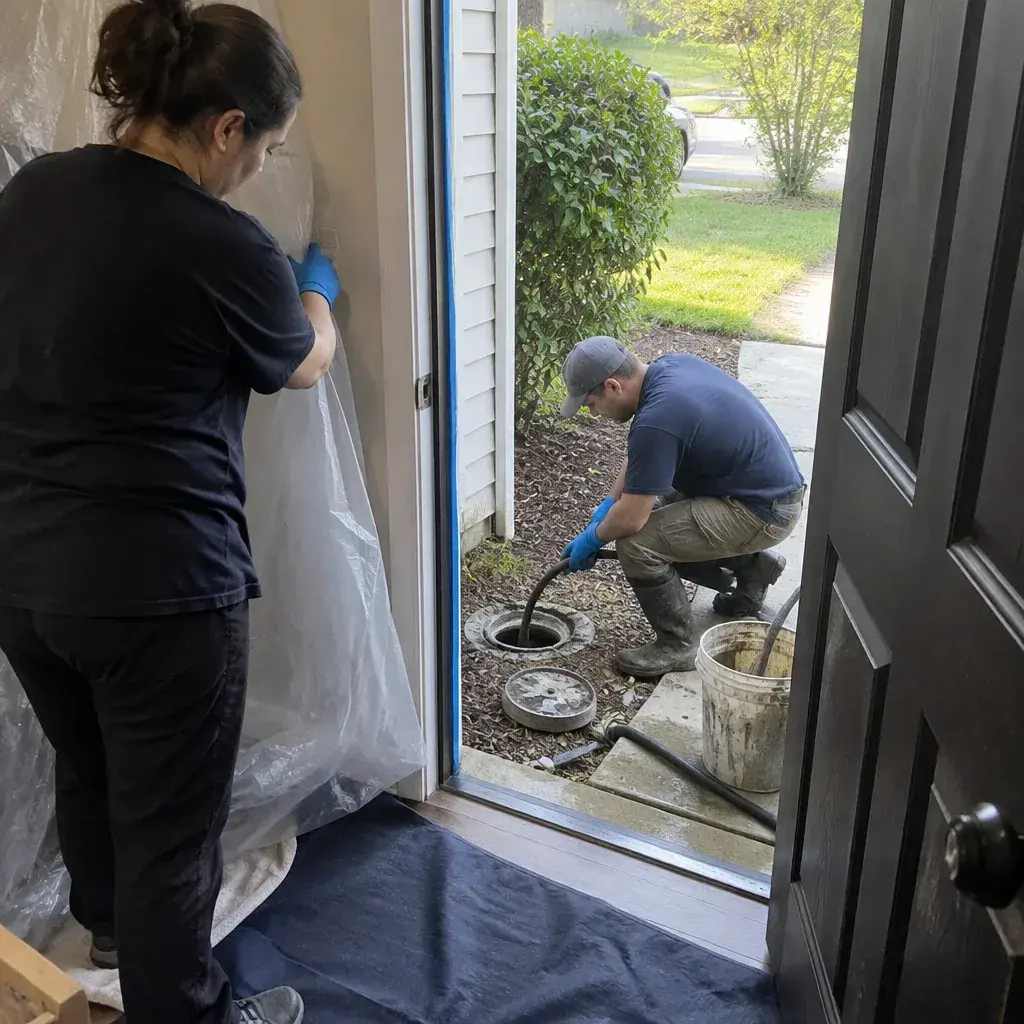
A defined work boundary gives you a clearer basis for deciding where to stay in your Minnesota home. Containment separates the cleanup area from spaces intended to remain clean; ask the provider to show you where that boundary sits and which doorway or hall marks its edge. This matters in a subdivision house where several rooms open onto one central passage. A barrier is part of the plan, not permission to cross into the affected area or handle anything there.
Ask what the boundary means for daily movement while work is underway. In Minnesota, the provider can explain which doors remain usable, whether a shared stair or hall is part of the work area, and how workers will enter and leave. If your usual route is included, the household may have no workable way to use otherwise separate rooms. Homes near Clifton E. French Regional Park may differ from homes elsewhere in the state, but the specific floor plan and work setup guide this decision.
Consider Household Safety Needs
Sewage can carry harmful contaminants, so consider who would remain in the home during Minnesota cleanup. A person with health concerns, limited mobility, or difficulty following room restrictions may need a different arrangement from someone who can stay clear of the work area. Tell the cleanup provider about those needs and ask what safety guidance applies. The provider can explain the work boundaries; your household may also need advice from a health professional about personal exposure concerns.
Children and pets can cross a doorway before anyone notices, which can make a separation plan hard to maintain in a Minnesota home. Think about whether every household member can reliably stay out of restricted rooms and avoid contact with affected surfaces or materials. Frequent trips through shared areas can make it harder to keep affected rooms separate. Discuss these practical limits with the provider before deciding who can remain at home.
Know When to Reconsider Staying
Reconsider staying if the provider identifies sewage beyond the original work area, changes the restricted boundary, or says a route you rely on must close. In Minnesota, tell the provider promptly if the stated limits no longer match what you see or if household members cannot follow them. Do not enter the affected space to check. Ask for an updated explanation of the areas in use and whether your household should leave while the work plan changes.
Before work starts, ask the cleanup provider which rooms your household may use, where the work boundary will be, and how workers will reach the affected area. Homes across Minnesota, including near Menahga Area Historical Museum, Dakota County Technical College, and Saint Bonifacius Memorial Park, each have their own layout. Can everyone use essential rooms without entering the work zone? What household needs should change the plan? Follow the provider’s safety guidance and ask again if the boundary or access route changes.
Dealing with a sewer backup in your home?
The plumbing cause and the cleanup work are separate parts of the response. Whether you live in a ranch near Clifton E. French Regional Park, a split-level near Beaver Creek Valley State Park, or a subdivision home near Sunrise Prairie Regional Trail, the cleanup question is what the sewage reached. Porous flooring or wall materials may need removal before other surfaces are cleaned, disinfected, and dried. From a safe place, take photos if you can. Assess without entering, then ask a qualified provider among the pros we connect you with about cleanup scope, availability, timing, and any visit charge. Have a plumber diagnose and repair the backup source.